The Autism Disclosure Dilemma
Deciding whether to tell someone you’re autistic can be surprisingly tricky. This decision tree walks through some of the questions worth weighing up. The whole thing is written out underneath the diagram, so you can read it either way.
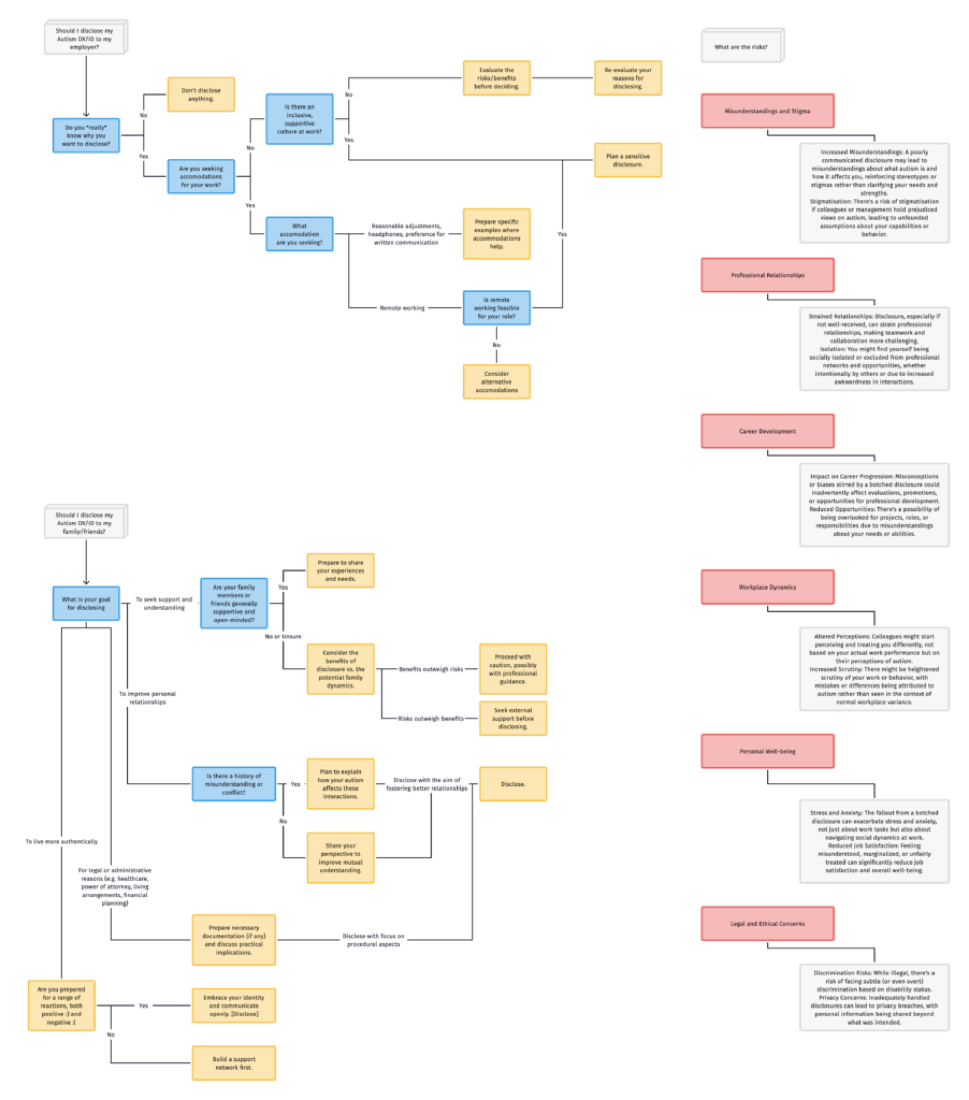
Should I disclose to my employer?
Start here: do you really know why you want to disclose?
- No. Don’t disclose anything yet. Work out your reason first.
- Yes. Move on to the next question.
Are you seeking accommodations for your work?
- No. Then ask: is there an inclusive, supportive culture at work?
- No. Evaluate the risks and benefits before deciding, then re-evaluate your reasons for disclosing.
- Yes. Plan a sensitive disclosure.
- Yes. Then ask: what accommodation are you actually seeking?
- Reasonable adjustments (headphones, a preference for written communication, and so on). Prepare specific examples of where those accommodations help, then plan a sensitive disclosure.
- Remote working. Is remote working feasible for your role?
- Yes. Plan a sensitive disclosure.
- No. Consider alternative accommodations.
Should I disclose to family and friends?
Start here: what is your goal for disclosing?
Goal: to seek support and understanding. Are your family or friends generally supportive and open-minded?
- Yes. Prepare to share your experiences and needs.
- No, or unsure. Weigh the benefits of disclosure against the potential effect on
family dynamics.
- Benefits outweigh the risks. Proceed with caution, possibly with professional guidance.
- Risks outweigh the benefits. Seek external support before disclosing.
Goal: to improve personal relationships. Is there a history of misunderstanding or conflict?
- Yes. Plan how to explain the way your autism affects those interactions, then disclose with the aim of building better relationships.
- No. Share your perspective to improve mutual understanding.
Goal: for legal or administrative reasons (healthcare, power of attorney, living arrangements, financial planning). Prepare any necessary documentation and discuss the practical implications, disclosing with a focus on the procedural side.
Goal: to live more authentically. Are you prepared for a range of reactions, both positive and negative?
- Yes. Embrace your identity and communicate openly.
- No. Build a support network first.
What are the risks?
Worth sitting with before you decide, particularly at work.
Misunderstandings and stigma. A poorly communicated disclosure can leave people with the wrong idea about what autism is and how it affects you, reinforcing stereotypes instead of clarifying your needs and strengths. Where colleagues or managers already hold prejudiced views, it can invite unfounded assumptions about your capabilities.
Professional relationships. A disclosure that isn’t well received can strain working relationships and make collaboration harder. You may also find yourself left out of professional networks and opportunities, sometimes deliberately, sometimes through awkwardness.
Career development. Misconceptions can quietly affect evaluations, promotions, and development opportunities, and you may be overlooked for projects or responsibilities because of misunderstandings about what you need or what you can do.
Workplace dynamics. Colleagues may start treating you according to their idea of autism rather than your actual work. Ordinary mistakes can attract heightened scrutiny and get attributed to autism rather than read as normal variation.
Personal well-being. A disclosure that goes badly can add stress and anxiety, not only about the work itself but about navigating the social fallout. Feeling misunderstood, marginalised, or unfairly treated takes a real toll on job satisfaction.
Legal and ethical concerns. Discrimination on the basis of disability is illegal, but subtle (and occasionally overt) discrimination still happens. Disclosures that are handled carelessly can also become privacy breaches, with personal information travelling further than you intended.